
Newsroom
From 5kWh to 15kWh+: How Pytes Responds to the Growing Demand for Higher-Capacity Residential Storage
Introduction
As the global energy landscape rapidly transitions toward renewable power, residential energy storage has emerged as a pivotal segment of the clean energy ecosystem. Homeowners increasingly prioritize energy independence, self-consumption efficiency, and resilience against grid volatility. Consequently, residential storage is evolving from small, supplemental devices toward higher-capacity, scalable systems that better meet real-world household energy needs.
Industry Trend: Expanding Storage Capacity and Rapid Market Growth
Recent industry forecasts indicate that the global energy storage market continues to experience robust growth. BloombergNEF projects that overall energy storage installations (excluding pumped hydro) will reach approximately 92–94 GW (247 GWh) in 2025, representing more than 20 % year-on-year growth and record annual additions.
While utility - scale deployments have traditionally dominated installations, the residential segment is poised for significant expansion as distributed solar adoption increases and cost-effective storage becomes more accessible to consumers. According to market intelligence, the residential energy storage market alone is projected to grow at a double-digit compound annual rate through the end of the decade, driven by increasing solar deployment and the desire for energy cost savings and autonomy.
Furthermore, longer - term outlooks suggest that global energy storage capacity could grow more than ten-fold by 2035, reaching multi-terawatt-hour scales as renewable penetration deepens worldwide.
These data points reflect a clear, structural shift in energy storage demand—from grid-centric applications to distributed and residential solutions with higher per-system capacity.
Impact on Pytes: Shifting Customer Expectations for Larger Systems
At Pytes, our early product strategy focused on introducing compact, 5 kWh residential batteries—such as the E-Box 48100R and V5—to help homeowners adopt their first energy storage systems. These products effectively enabled users to capture and deploy solar energy, reduce peak grid consumption, and enhance household energy management.
However, the evolving market has revealed that many homeowners are seeking larger capacity systems that can support more comprehensive energy coverage—such as daily peak loads, higher self-consumption rates, and future-proofed scalability. This shift reflects not only enhanced user expectations but also broader regional trends where residential systems are increasingly used as key components of hybrid solar + storage installations.
Pytes’ Product Evolution and Strategic Response
In response to these trends, Pytes has strategically expanded its residential product portfolio to better align with customer requirements:
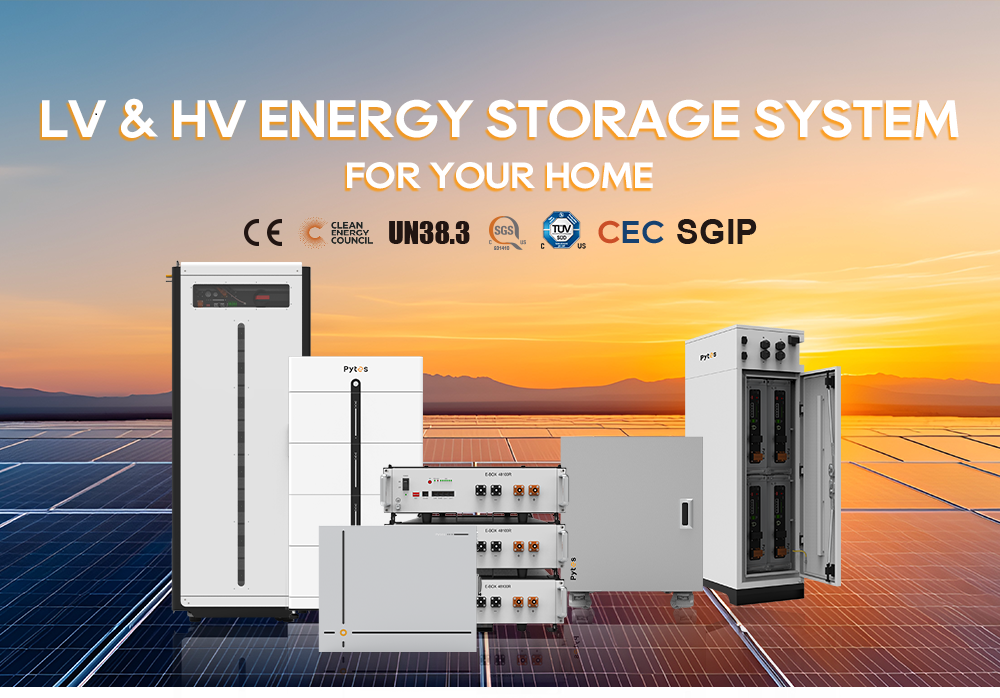
lStackable Low-Voltage Batteries:Designed for ease of installation and flexible capacity scaling, allowing users to start with a base unit and expand over time.
lHigh-Voltage Residential Batteries — HV48100 and HV48300: Delivering higher energy capacity in a single unit, these products are tailored for homes with larger loads or advanced energy management needs.
lLarger Capacity Models — V10, V12, V15, V16: With individual units ranging from 10 kWh to 15 kWh, these models support greater daily energy coverage and reduce the number of units required for larger systems.
We have also upgraded the cell performance and system integration capabilities of earlier 5 kWh units, enabling them to be integrated effectively into larger, multi-unit systems. These enhancements ensure stable operation, flexible deployment, and compatibility with a broad range of installation scenarios.
Strategic Considerations Beyond Hardware
Pytes has complemented our product innovations with a series of market-focused initiatives to support global residential storage deployment:
lLocal Market Commitment: Establishing offices and warehouses in key regions such as Europe and North America to improve supply reliability, logistics efficiency, and customer confidence.
lRegulatory Compliance: Achieving certifications including Japan JET, Korea KC, and Australia CEC, ensuring products meet stringent local safety and quality standards.
lSystem Integration and Compatibility: Partnering with leading inverter manufacturers such as Victron and Solis to secure official compatibility listings, and expanding our ecosystem with Pytes’ own low-voltage inverters to facilitate seamless integration and performance optimization.
Conclusion
The trend toward higher-capacity residential storage reflects an evolution in homeowner expectations and energy system design. As distributed energy resources proliferate, systems must offer not only reliability and performance but also scalability, adaptability, and value over time.
By aligning our product development roadmap with these structural market shifts—and reinforcing it with regional strategy and compliance efforts—Pytes is well positioned to support a broad spectrum of residential energy storage needs. Our approach demonstrates not just responsiveness to current demand, but a forward-looking commitment to empowering homeowners with energy storage solutions that are both practical and future-ready.