
Newsroom
Battery installation involves more than connecting the battery to an inverter. Protection components, pre-charge functions, communication wiring, and mounting methods all affect the installation process.
Integrating these functions into the battery itself can simplify system design and reduce the number of additional components that need to be installed. The V16 takes this approach with integrated protection, multiple communication interfaces, and flexible mounting options.
A DC breaker provides a means of controlling and isolating the battery-side DC circuit.
The V16 integrates a DC breaker into the battery structure. This reduces the need to arrange a separate battery-side breaker as an additional component and helps keep the DC connection layout more compact.
For installers, integrating the breaker into the battery can also make the protection arrangement more straightforward during system installation.
The pre-charge circuit is another function that needs to be considered when connecting a battery to an inverter.
Instead of requiring a separate pre-charge arrangement, the V16 integrates the pre-charge circuit into the battery. This reduces additional components and wiring on the battery side.
Combining the DC breaker and pre-charge circuit within the battery provides a more integrated approach to battery-side protection and connection.
Communication between the battery and inverter is an important part of system commissioning.
The V16 provides RS485, CAN, WiFi, and dry contact communication interfaces. It is designed to support closed-loop communication with most mainstream inverter brands.
Having multiple interface options gives installers more flexibility when integrating the battery with different system architectures and compatible inverter platforms.
Installation sites do not always have the same space or layout.
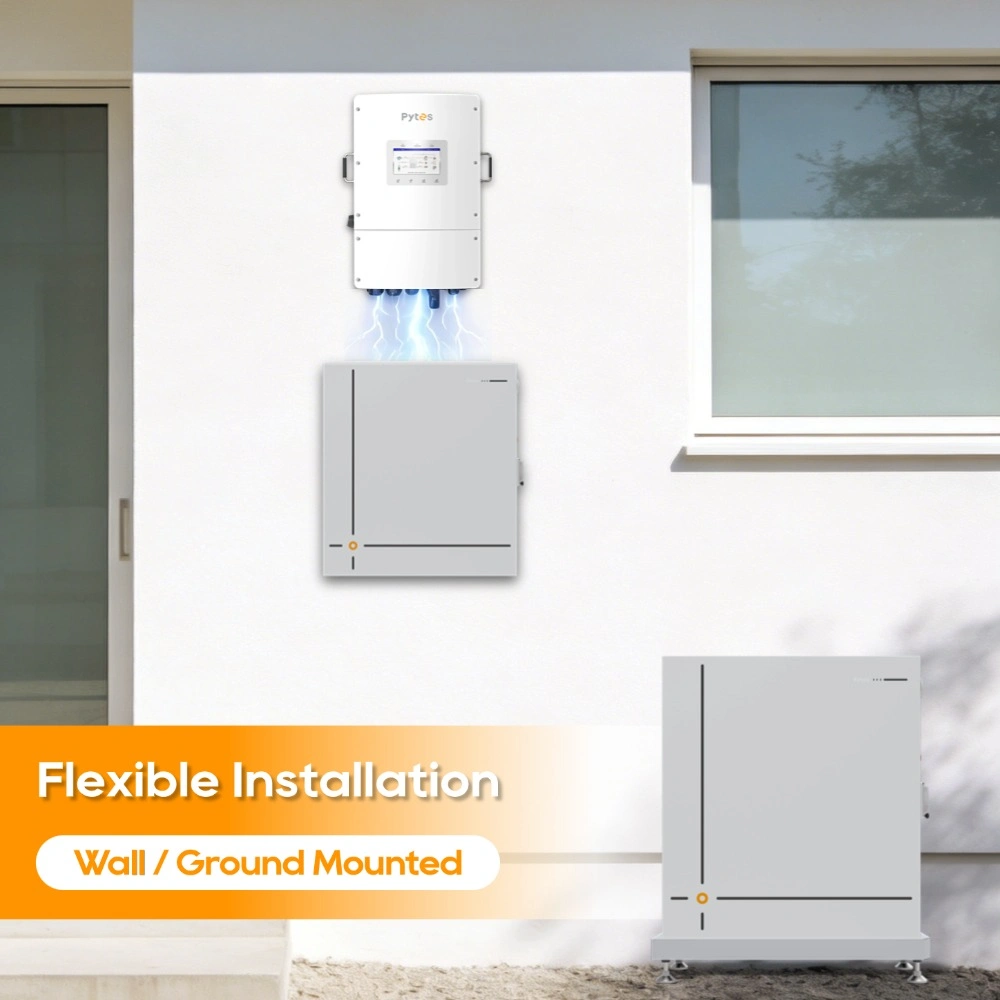
The V16 supports both wall-mounted and ground-mounted installation, allowing installers to select the mounting method according to the project site.
This is useful when indoor wall space is limited or when the project layout is better suited to ground installation.
Installation complexity is often affected by the number of separate components, wiring points, and installation decisions required on site.
The V16 addresses several of these areas within one battery design:
DC breaker integrated
Pre-charge circuit integrated
RS485 / CAN / WiFi / dry contact interfaces
Wall or ground mounting
These features do not eliminate all installation requirements, but they can reduce the amount of additional equipment and give installers a more straightforward way to integrate the battery into different energy storage systems.