
Newsroom
Different energy storage projects require different battery capacities, voltage ranges, and power levels. The battery configuration therefore needs to match the actual system design rather than simply using the same setup for every project.
The HV48300 MAX SE provides several configuration options, allowing system integrators to adjust the battery system according to project requirements.
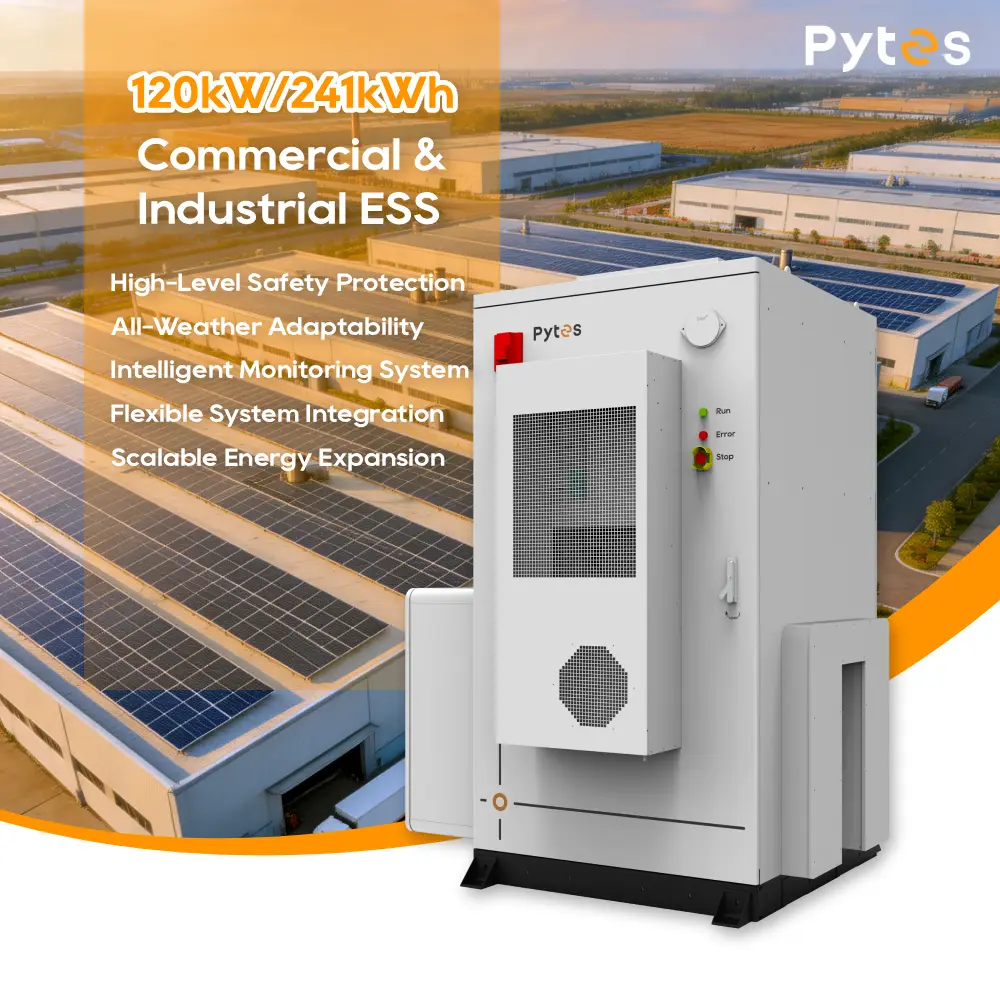
The HV48300 MAX SEsupports multiple battery module configurations in series. Changing the number of modules connected in series changes the system's operating voltage and rated energy.
For example, the 1P configuration supports different series options, from 1P8S to 1P15S. The rated energy ranges from 128.60 kWh to 241.15 kWh, while the operating voltage changes from 372–454.4 V at 1P8S to 697.5–852 V at 1P15S.
This gives project designers more flexibility when selecting a battery configuration based on the required energy capacity and inverter voltage range.
The HV48300 MAX SE also supports 1P and 2P battery architectures.
In the 1P configuration, one BCU can connect with multiple BMUs. In the 2P configuration, two BCUs operate in parallel, with each BCU supporting up to 1P7S. This configuration provides higher current capability for applications with greater power requirements.
This means the configuration can be selected not only according to how much energy the project needs, but also according to the required charge and discharge current.
When one cabinet is not enough for the required storage capacity, multiple HV48300 MAX SE cabinets can be connected in parallel.
This provides a cabinet-level expansion option for larger commercial and industrial energy storage systems. The basic battery platform remains the same while the overall system capacity increases with additional cabinets.
The configuration can therefore be considered at three levels:
Series configuration: adjusts voltage and energy capacity
1P or 2P configuration: addresses different current and power requirements
Multiple cabinets: expands the overall storage capacity
When configuring an HV48300 MAX SE system, the main factors to check are:
Energy requirement: How much energy needs to be stored?
Voltage requirement: What DC voltage range does the inverter require?
Power requirement: What charge and discharge current or power is needed?
System scale: Is a single cabinet sufficient, or is a multi-cabinet system required?
For example, a project with moderate storage requirements may use a lower series configuration, while a project requiring higher energy capacity can select a configuration with more modules. If higher current capability is required, the 2P architecture provides another option. Larger projects can then use multiple cabinets in parallel.
The Pytes HV48300 MAX SE is therefore not limited to one battery configuration. Its series options, 1P/2P architecture, and cabinet-level parallel expansion allow the system to be configured around different energy, voltage, power, and project-scale requirements.