
Newsroom
Different energy storage projects can have different voltage and capacity requirements. A battery system therefore needs enough configuration flexibility to fit the project rather than relying on one fixed system structure.
The Pytes HV48300 MAX uses a modular architecture with multiple battery string configurations, allowing the system to be configured according to project requirements. Its operating voltage range is 224 V to 1497 V, Its operating voltage range is 224 V to 1497 V, and with each BMU having a standard energy of 16.076 kWh, the system capacity can be configured from approximately 80 kWh to 417 kWh depending on the number of BMUs used.
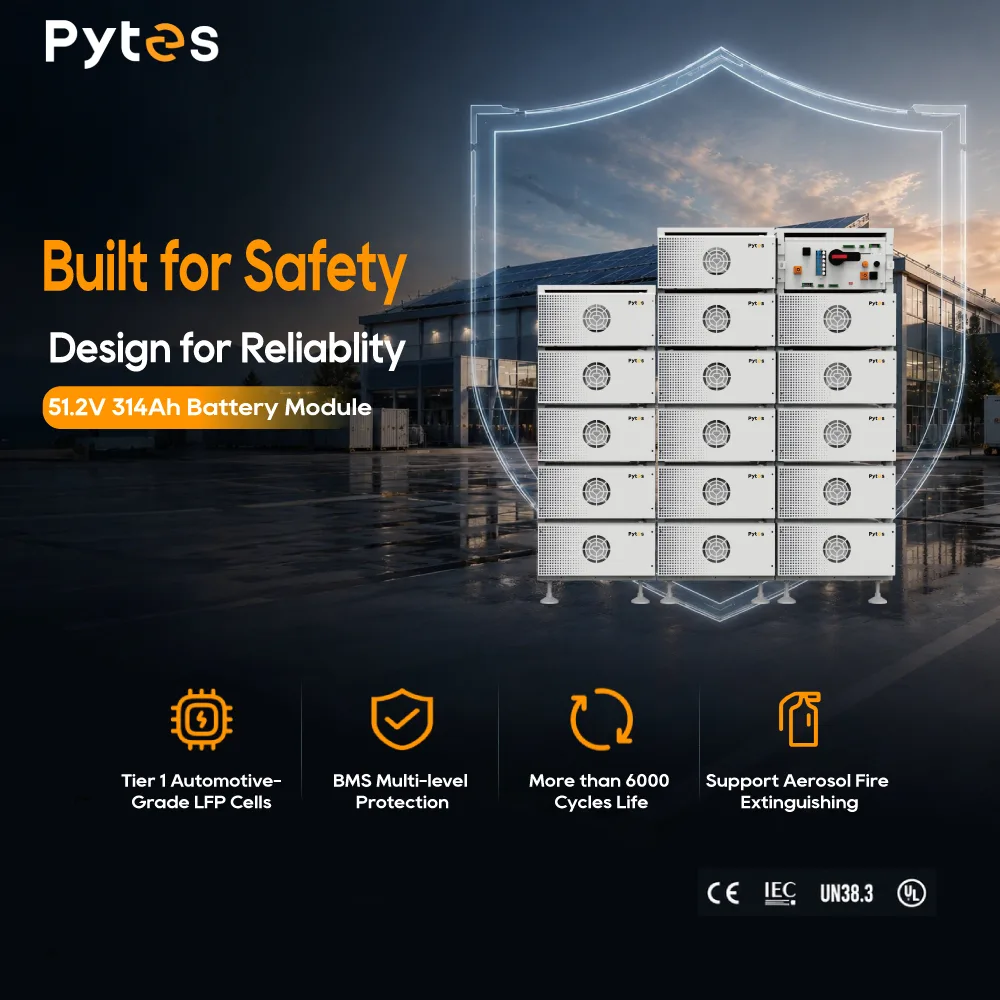
The HV48300 MAX supports multiple battery string configurations, allowing the battery system to be arranged according to the voltage and capacity requirements of the project.
The system supports 5 to 26 BMUs per BCU, providing different configuration options for system build-up. This modular approach allows the battery arrangement to be planned as part of the overall energy storage system rather than being limited to a single fixed configuration.
Voltage is one of the key factors when configuring a high-voltage battery system.
The HV48300 MAX provides a wide operating voltage range from 224 V to 1497 V. Combined with its multiple battery string configurations, this gives system designers flexibility when matching the battery system to different project voltage requirements.
Its universal mounting structure also supports compatibility with various inverter models, helping simplify system integration.
The battery string configuration should therefore be considered together with the voltage requirements of the complete energy storage system.
Projects can also differ in their required storage capacity.
With 5 to 26 BMUs supported per BCU, the HV48300 MAX can be configured from approximately 80 kWh to 417 kWh. Additional system capacity can be achieved by expanding the overall battery system architecture.
Pytes positions the HV48300 MAX as a modular high-voltage energy storage solution that can scale to MWh-level capacity for industrial-scale applications.
This makes configuration planning important for commercial and industrial energy storage projects with different capacity requirements.
For an HV48300 MAX project, configuration should start with the actual system requirements.
The main points to consider are:
Required system voltage
Required storage capacity
Battery string configuration
Overall energy storage system architecture
These factors determine how the modular battery system should be configured for the application.
The HV48300 MAX is designed around a modular high-voltage battery architecture rather than a single fixed configuration. Its multiple battery string configurations and wide operating voltage range allow the system to be planned for projects with different voltage and capacity requirements.
It is suitable for applications including commercial and industrial peak shaving, backup power supply, and PV-storage-charging integration.
For Pytes, this configuration flexibility provides a practical way to adapt the HV48300 MAX to different commercial and industrial energy storage projects.