
Newsroom
Solar panels generate electricity during the day, but many homes continue to use a significant amount of power after sunset. A battery storage system can bridge this gap by storing excess solar energy when production is high and supplying electricity later when solar generation is unavailable.
The Pytes V16 is a 51.2V LFP battery designed for residential and small commercial energy storage. With 16.07kWh of nominal energy capacity and up to 10.24kW of maximum discharge power, it can be used in solar-plus-storage systems that need to shift daytime solar generation to evening and nighttime consumption.
During daylight hours, solar panels generate electricity for the building. The solar power is first used by active loads such as appliances, lighting, HVAC equipment, and other electrical devices. When solar production is higher than the current load, the surplus can be used to charge the battery.
This allows solar generation and electricity consumption to occur at different times. Instead of requiring all solar energy to be consumed while the panels are producing power, the storage system keeps part of that energy available for later use.
The V16 uses LFP battery chemistry and has a nominal voltage of 51.2V. Its 16.07kWh nominal energy capacity provides a substantial storage capacity for residential and light commercial applications.
After sunset, solar panels stop producing electricity. The battery can then discharge to supply connected loads, depending on the inverter configuration and the system's energy management settings.
For a typical solar-plus-storage setup, the operating sequence is straightforward:
Daytime: Solar panels generate electricity → loads use solar power → surplus solar energy charges the V16.
Evening: Solar production decreases → the battery begins supplying stored energy.
Night: The battery continues to support the connected loads according to the system's configured operating strategy and available state of charge.
This type of energy shifting is useful for households that generate more solar power during the middle of the day but have higher electricity consumption in the evening.
Battery capacity determines how much energy can be stored for later use. The V16 provides 16.07kWh of nominal energy, giving installers a larger low-voltage battery option for projects where a smaller battery may not provide enough storage.
The actual amount of energy available to loads will depend on factors such as the system's operating limits, state of charge, inverter efficiency, and load demand. For this reason, battery sizing should be based on the property's actual solar generation and electricity consumption profile.
The V16 also supports a recommended discharge current of 150A (7.68kW) and a maximum discharge current of 200A, corresponding to up to 10.24kW of output power. This level of power output enables the battery to continuously support high-demand household appliances such as air conditioners, electric ovens, and water heaters, ensuring stable operation even during peak evening hours.
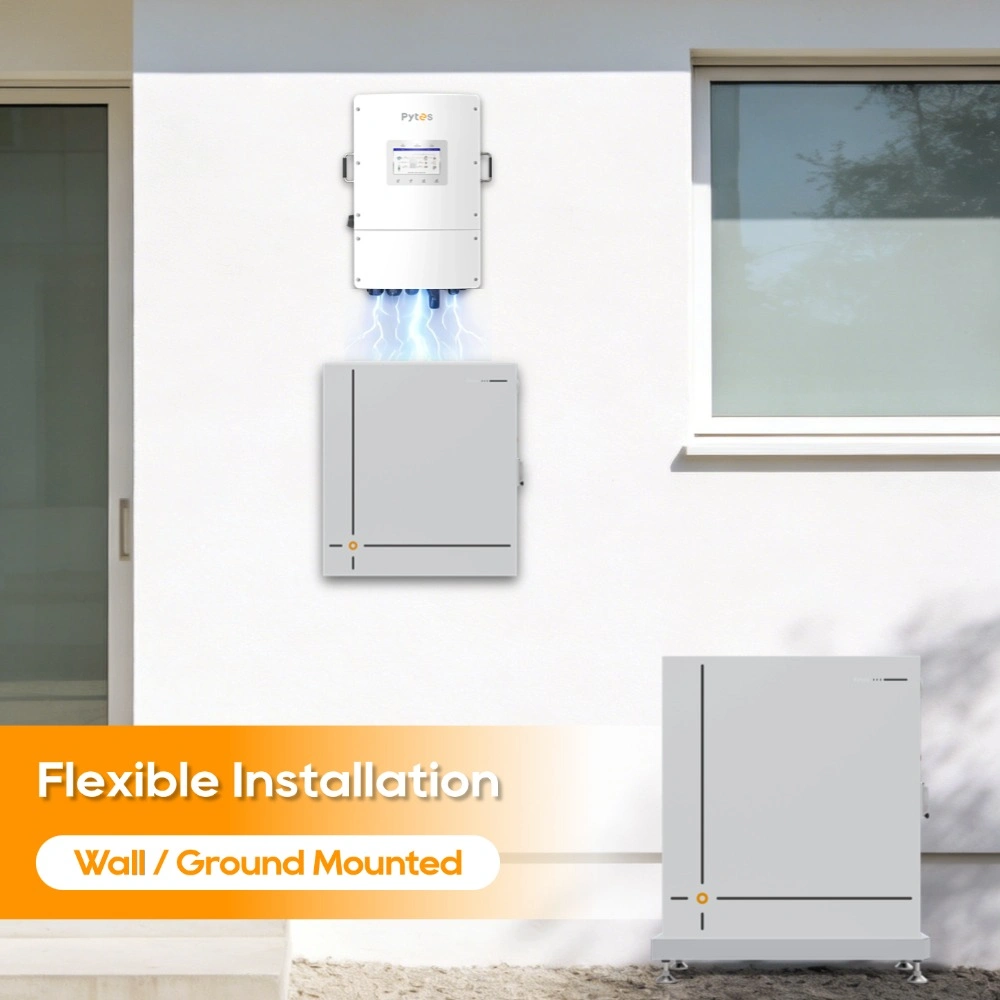
A solar battery does not always have to be installed indoors. Some residential and small commercial projects have limited indoor space or require equipment to be installed outside.
The V16 has an IP66-rated enclosure and an integrated heating pad. Its specified operating temperature range is 0°C to 55°C (32°F to 131°F) for charging and -20°C to 55°C (-4°F to 131°F) for discharging. This makes the battery suitable for outdoor energy storage installations where environmental conditions need to be considered.
The integrated heating system is also useful for installations exposed to lower temperatures. However, the battery's operating conditions and charging requirements should always be considered when designing the complete system.
A battery needs to communicate properly with the inverter to coordinate charging, discharging, and battery protection functions.
The V16 supports RS485, CAN, Wi-Fi, and dry-contact communication and is designed for closed-loop communication with most mainstream inverter systems. This gives installers more flexibility when integrating the battery into a solar-plus-storage system.
The complete system still needs to be designed around compatible inverter models, communication protocols, battery settings, and local installation requirements.
The V16 integrates several protection components into the battery system, including a DC breaker and pre-charge circuit. It also includes an aerosol fire suppression module.
These built-in components can simplify the battery-side installation and reduce the need for additional external components. The battery uses LFP chemistry and has a stated cycle life of up to 8,000 cycles under the specified test conditions, with a 10-year warranty.
For a home with rooftop solar, the basic application can be understood in three stages.
1. Generate solar power during the dayThe solar array supplies the home's daytime electricity demand.
2. Store surplus energy
When solar production exceeds the immediate demand, available surplus energy can be directed to the V16 through the compatible inverter and energy management system.
3. Use stored energy after sunset
When solar generation falls, the battery can discharge stored energy to support the home's loads.
The exact nighttime runtime depends on how much energy was stored, the household's load profile, inverter efficiency, and the battery's operating limits. A 16.07kWh battery does not mean every home will receive the same number of hours of backup or nighttime power.