
Newsroom
For commercial and industrial facilities, electricity costs depend not only on total consumption but also on when electricity is used. Factories, warehouses, and commercial buildings can experience periods of high demand, while solar generation changes throughout the day.
Battery energy storage provides a way to shift stored energy to periods when it is needed.
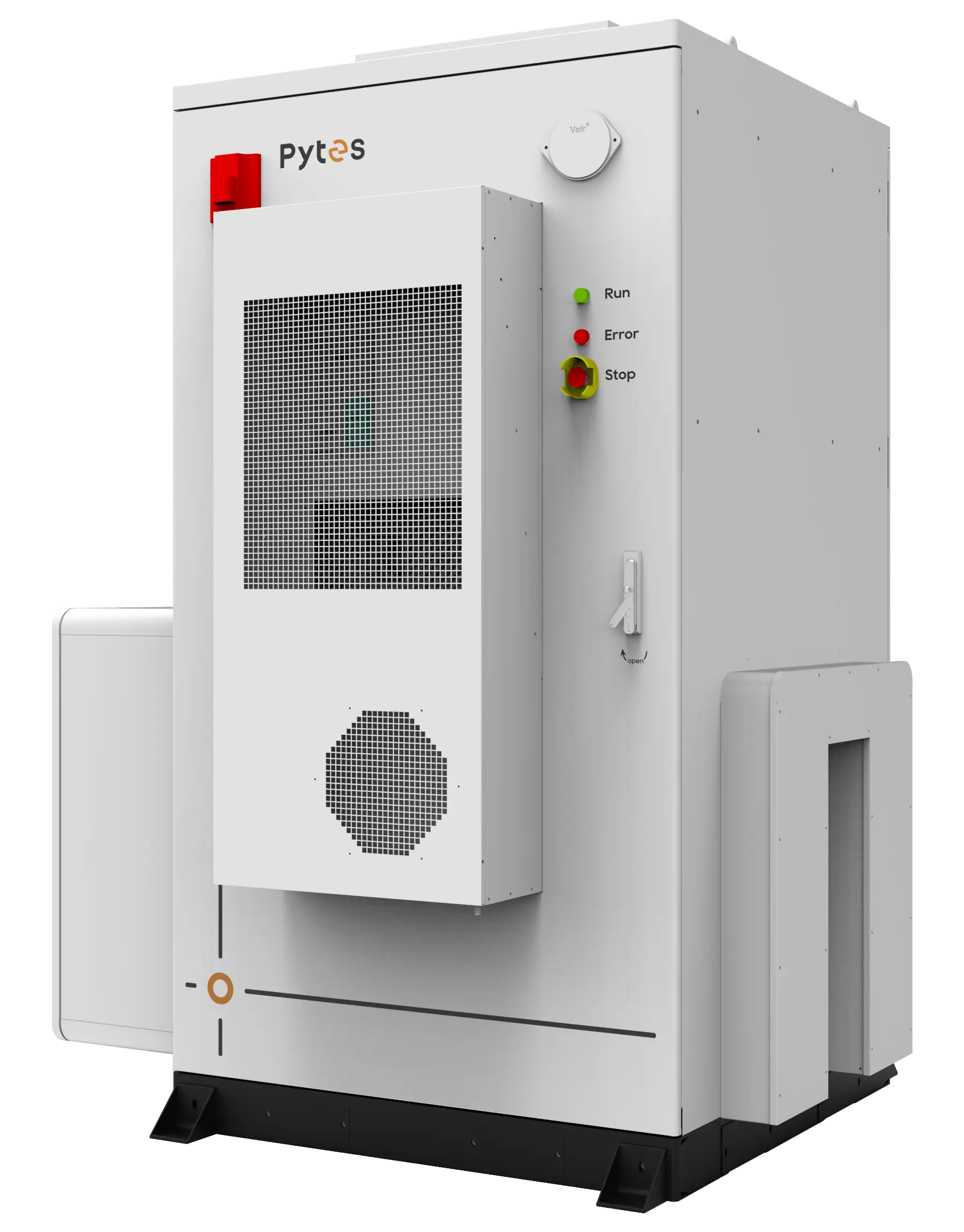
The Pytes HV48300 Max SE is a high-voltage energy storage solution for commercial and industrial applications. It uses LFP cells, supports multiple battery string configurations, and provides up to 241.15 kWh rated energy and 120.57 kW rated power per cabinet in the 1P15S configuration. Multiple cabinets can be connected in parallel for larger systems.
One common application is peak shaving.
When facility demand is lower, the battery can be charged. During selected high-demand periods, it can discharge to supply part of the facility load.
Lower-demand period → Battery charging
Higher-demand period → Battery discharging
Whether this reduces overall electricity costs depends on the local tariff, demand charges, load profile, battery efficiency, and system control strategy. The battery itself does not automatically reduce the electricity bill.
Battery storage can also help a facility use more of its solar generation.
When PV production is higher than the facility's immediate demand, surplus energy can be stored:
Solar → Facility Loads + Battery
When solar production decreases:
Battery → Facility Loads
This allows stored solar energy to be used later instead of relying entirely on grid electricity at that time.
C&I battery sizing needs to consider both energy capacity (kWh) and power (kW).
The HV48300 Max SE offers flexible 1P configurations per cabinet: the 1P15S configuration provides 241.15 kWh (120.57 kW), while the (1P7S)×2 configuration provides 225.06 kWh (112.53 kWh × 2) with dual BCUs for enhanced flexibility. Rated power ranges from 64.30 kW to 120.57 kW depending on configuration, and the modular design allows multiple cabinets to be connected in parallel for MWh-level scalability.
The suitable configuration depends on the facility's load profile, peak demand, solar generation, tariff structure, and required discharge duration.
The HV48300 Max SE has an IP55 rating for indoor and outdoor installation and uses module-level fans, forced-air cooling, and an integrated HVAC system for thermal management. The listed HVAC capacity is 5,000 W cooling and 2,500 W heating.
It also supports remote monitoring through PYTES Battery Cloud, while its universal mounting structure accommodates various inverter models.
For larger facilities, the system can be expanded by connecting multiple cabinets in parallel.
A C&I storage system should be designed around actual electricity consumption rather than battery capacity alone.
The basic process is:
Analyze the load → identify high-demand periods → review the tariff → size the battery → define the charge/discharge strategy
With the right configuration, battery storage can support peak shaving, solar energy utilization, and controlled energy shifting.
The HV48300 Max SE provides a modular high-voltage platform for these applications, with configurations reaching 241.15 kWh per cabinet and scalability for larger commercial and industrial energy storage projects.