
Newsroom
In modern energy storage applications, high-voltage battery systems are often deployed in cabinet-style configurations. However, traditional battery cabinet solutions can vary significantly in terms of flexibility, integration approach, and installation structure.
The Pytes introduces the HV48300 MAX as part of its high-voltage energy storage portfolio, designed to support scalable system deployment and integration with modern inverter-based energy architectures.
Rather than positioning itself as a conventional “fixed battery cabinet replacement,” the HV48300 MAX focuses on providing a more modular and system-oriented energy storage configuration.
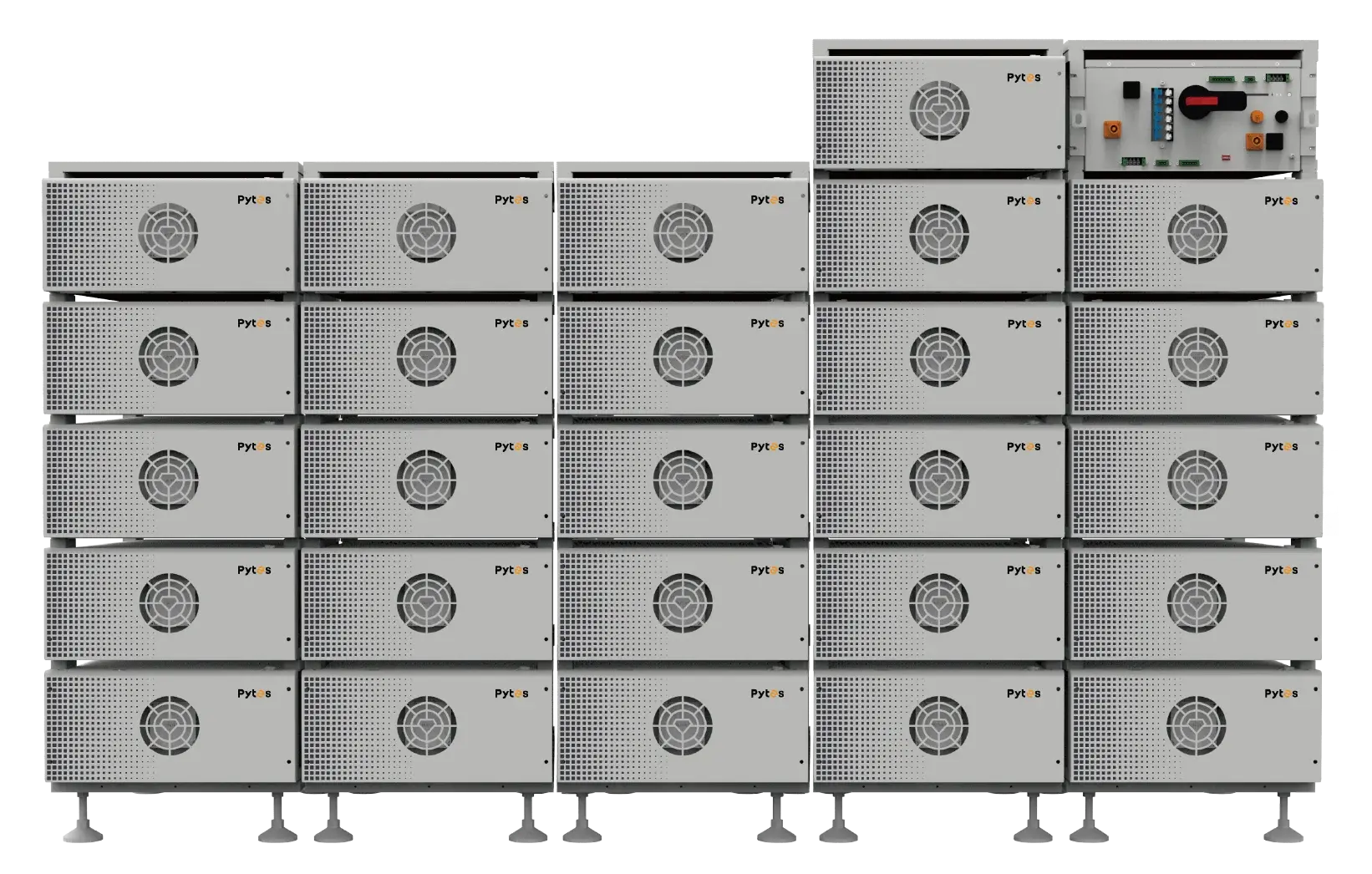
The HV48300 MAX is a high-voltage energy storage module developed by Pytes, designed for applications that require stable performance, long cycle life, and flexible system expansion.
It is intended for use in residential and commercial energy storage systems where configuration flexibility and system-level compatibility are important considerations.
Traditional battery cabinets:
Typically delivered as fixed cabinet-style assemblies
Capacity and configuration are often predefined at system level
Expansion may require additional cabinet units or system redesign
HV48300 MAX approach:
Designed with a modular system architecture concept
System capacity can be configured using standardized modules (16.076 kWh per module)
Supports more flexible configuration planning at installation stage
This makes the HV48300 MAX more adaptable in projects where energy demand may evolve over time.
Traditional battery cabinets:
Often optimized around specific inverter or system designs
Integration flexibility can vary depending on manufacturer architecture
HV48300 MAX:
Designed to be integrated into broader high-voltage energy storage systems
Supports multiple communication interfaces
This system-oriented approach helps installers align battery configuration with different project requirements.
Traditional battery cabinets:
Generally based on pre-engineered cabinet structures
Installation approach depends on cabinet size and system layout
HV48300 MAX:
Designed for use in modular energy storage configurations
Supports more flexible system layout planning depending on site conditions
This provides more adaptability for different residential or commercial installation environments.
Traditional battery cabinets:
Scaling typically achieved by adding additional full cabinets
System expansion may require more physical space and redesign
HV48300 MAX:
Designed to support scalable system configuration up to MWh-level energy storage systems
Expansion can be planned at system level depending on energy demand growth
This helps align the system with long-term energy storage planning needs.
Energy storage systems are increasingly required to support:
Variable household or commercial energy demand
Hybrid solar + storage configurations
Evolving inverter and grid interaction requirements
Within this context, the HV48300 MAX from Pytes is positioned as a flexible high-voltage storage building block rather than a fixed-structure cabinet-only solution.
This website uses cookies to provide you with a safer and more personal experience. By accepting, you agree to the Cookie Policy and the use of cookies for advertising and analytics purposes.