
Newsroom
Africa’s energy landscape is entering a new stage. Solar power is expanding rapidly across the continent, with around 4.5 GW of new solar PV capacity added in 2025, a 54% increase from the previous year. Distributed solar also accounted for an estimated 44% of new capacity.
As renewable generation grows, the challenge is no longer simply generating more electricity. Solar production and electricity demand do not always occur at the same time, while weather conditions and changing loads can introduce further variability. This makes flexibility increasingly important—and creates a broader role for energy storage.
From Backup Power to Flexible Energy
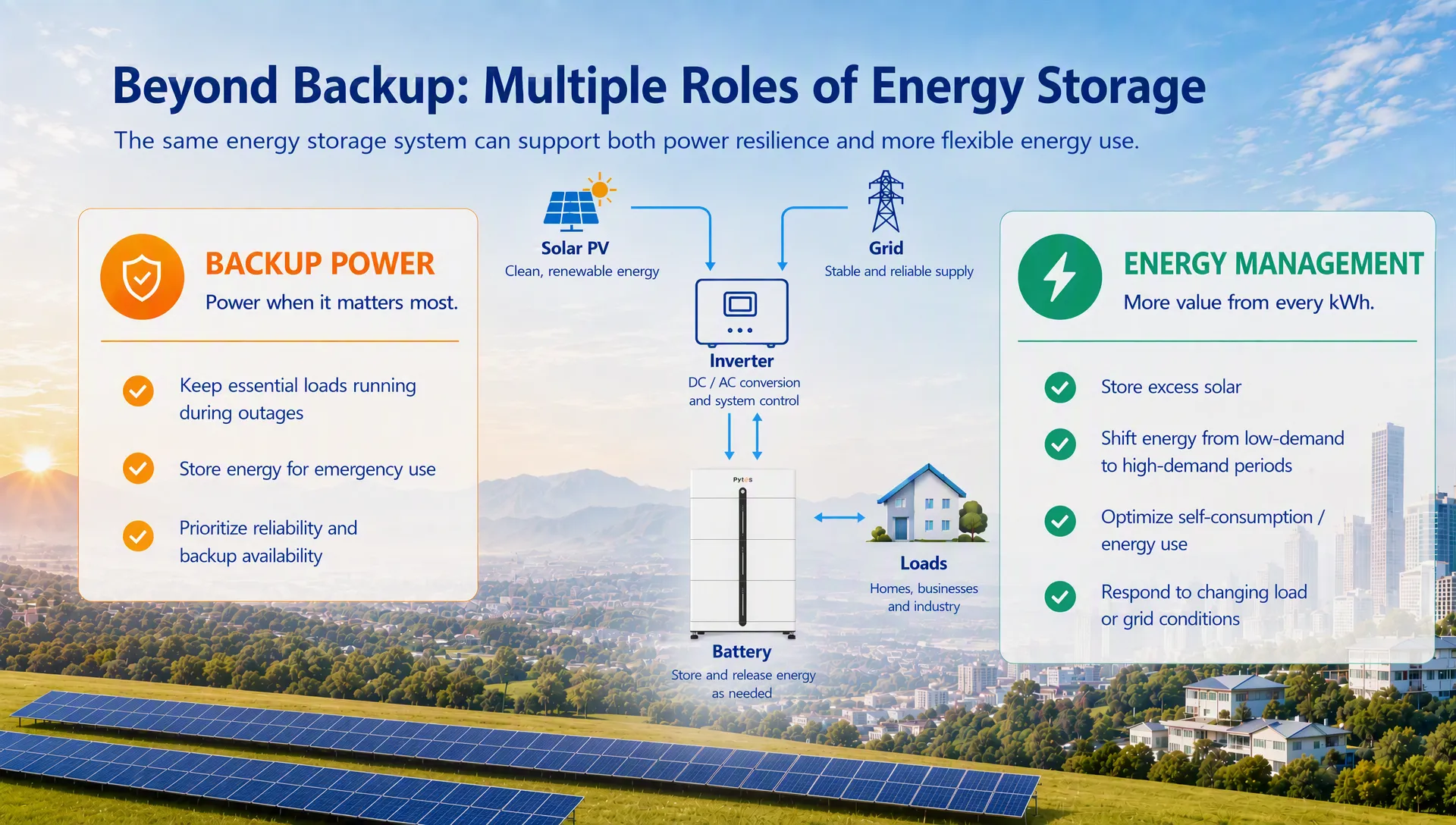
Traditionally, batteries were primarily valued for their ability to provide backup power when the grid failed. This remains an important function in many African markets, but solar expansion is creating additional applications for battery energy storage systems (BESS).
Consider a commercial facility with rooftop solar. Solar generation may peak around midday, while electricity demand continues into the afternoon and evening. A battery can store surplus solar energy and release it later, allowing electricity to be shifted from the time it is generated to the time it is needed.
The decision about when to charge or discharge is typically handled by an energy management system (EMS), hybrid inverter, or other system-level controller. The battery provides the physical capacity to absorb, store, and release that energy.
This changes the role of the battery. Instead of simply remaining available for emergencies, it can become an active energy resource supporting renewable energy integration, energy optimization, and power reliability.
Why Is Energy Flexibility Becoming More Important?
The need for flexibility is closely connected to the increasing share of variable renewable energy. Solar and wind generation can change with weather and time of day, while electricity demand follows its own pattern. As these resources become more widely deployed, power systems need ways to balance generation and consumption.
Kenya illustrates this transition. Nearly 90% of the country’s electricity generation comes from renewable sources, and the International Energy Agency identifies flexibility and storage as important tools for maintaining a secure and reliable power system as variable renewable energy expands.
Across Africa, similar dynamics are emerging through residential solar, commercial installations, distributed generation, and larger renewable energy projects. Energy storage provides a practical way to manage these differences by storing electricity when it is available and delivering it when it is needed.
What Does This Change Mean for the Battery?
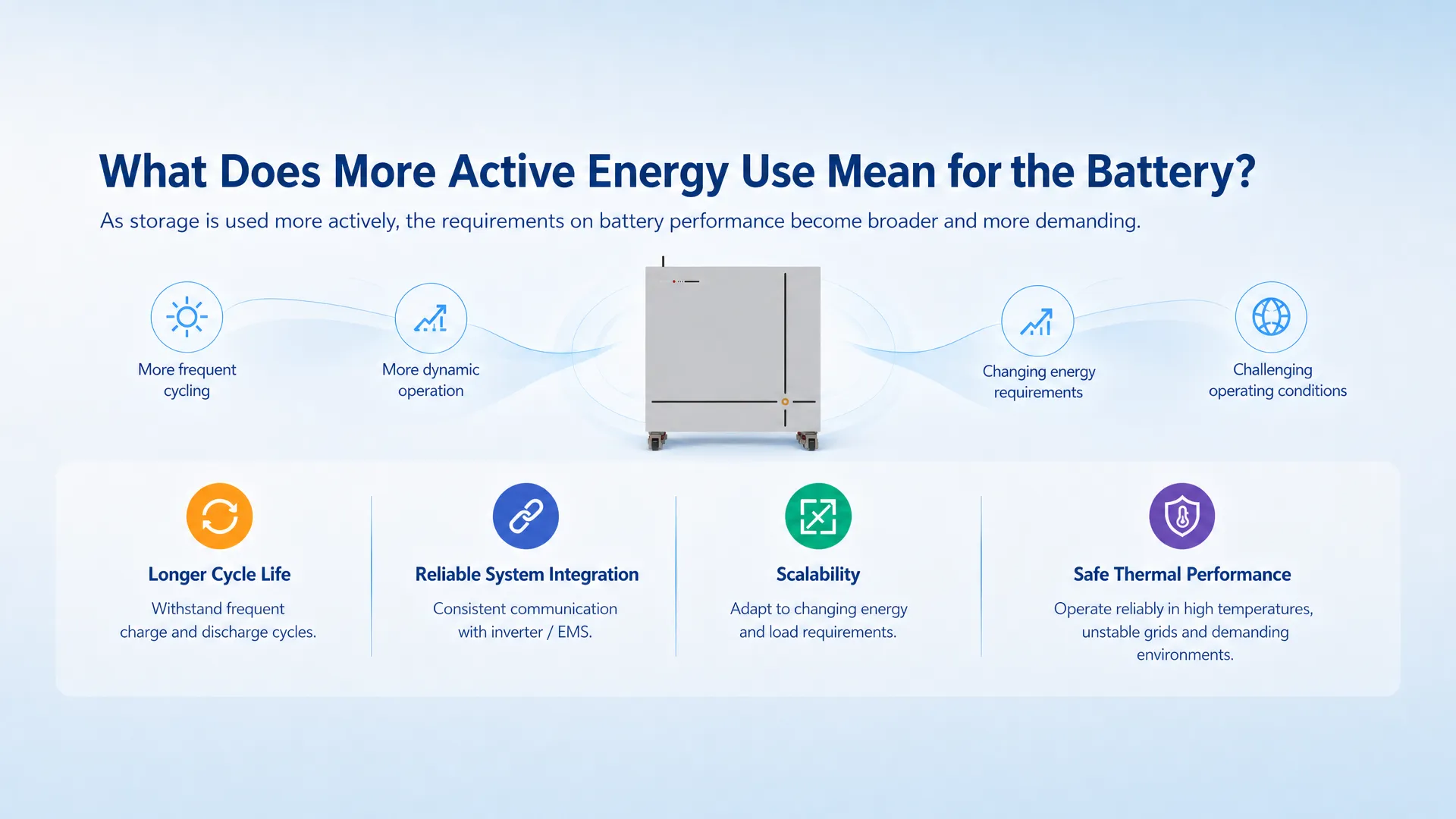
When a battery moves from occasional backup to active energy management, the requirements placed on the battery itself also change.
Frequent cycling makes long service life and stable performance increasingly important. Battery chemistry, depth of discharge, thermal management, and overall system design all influence how reliably a battery can operate over years of use.
Communication is equally important. An EMS or hybrid inverter needs information such as state of charge, temperature, operating limits, and protection status to manage the system effectively. The BMS provides battery monitoring and protection, while communication interfaces allow the battery to interact with compatible system components.
Scalability also matters as energy requirements change. Modular battery architectures can allow storage capacity to expand alongside additional solar generation, increased loads, or changing project requirements.
Finally, storage systems must perform under real operating conditions. High ambient temperatures, unstable grids, remote installations, and demanding operating environments can place additional requirements on battery safety, thermal performance, protection, and manufacturing quality.
How Pytes Supports a More Dynamic Energy Storage Landscape
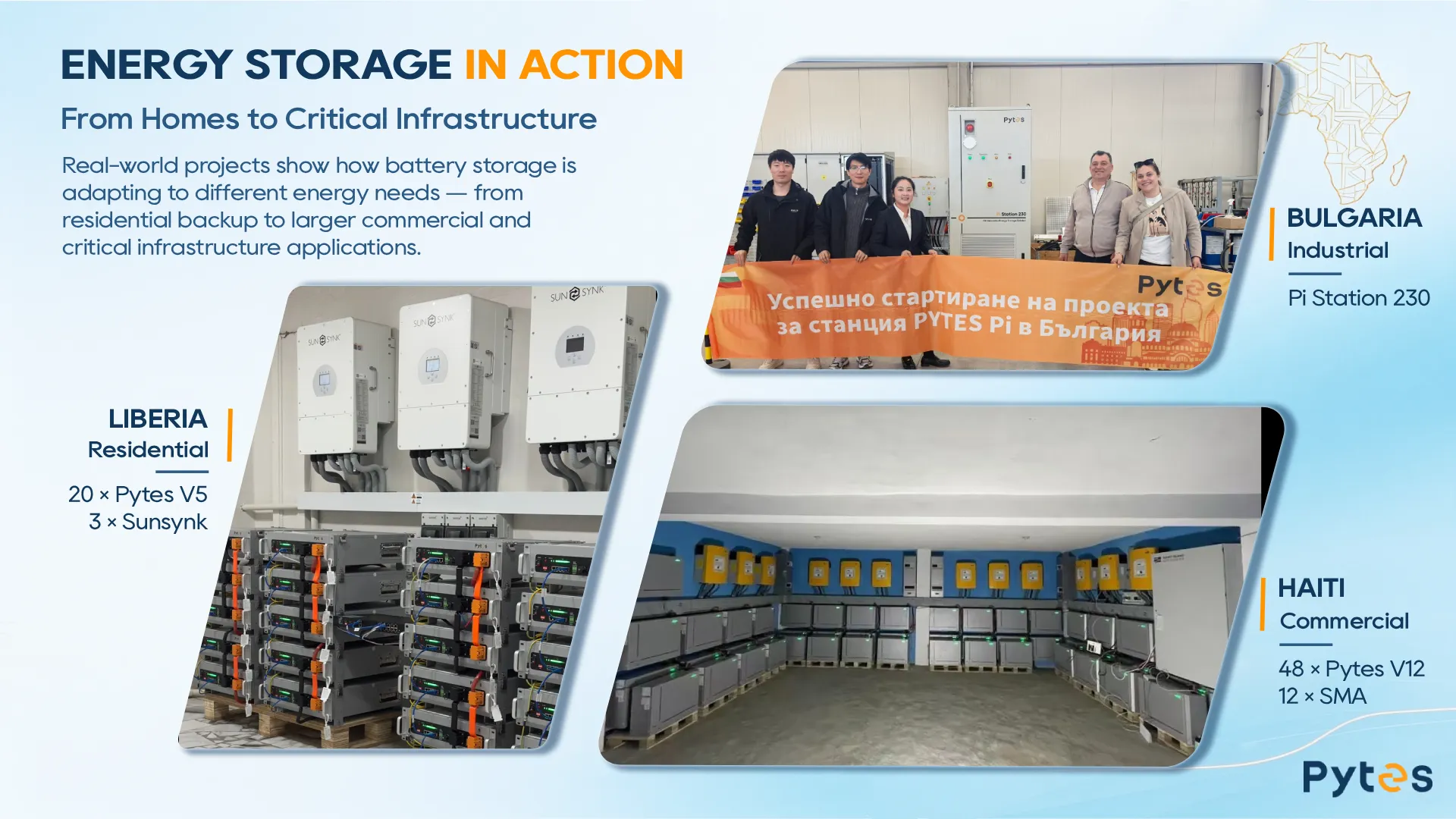
Pytes develops battery systems designed to operate as part of a broader energy-management architecture, supporting applications from residential solar-plus-storage to commercial and industrial energy storage.
For residential applications, V5°α Plus and V16 Lite provide modular battery storage that can support daily solar energy use, backup power, and future system expansion. For commercial and industrial applications, E-Box 48100R provides a scalable battery platform, while the HV48300 Max series is designed for higher-capacity energy storage applications where system scalability and long-term performance are important.
For larger integrated applications, Pi Station 261EX extends the portfolio from individual battery systems toward more complete energy storage solutions. Across these applications, Pytes focuses on the same fundamental requirements: reliable cycling, system integration, scalability, and safe long-term operation.
The objective is not simply to provide more battery capacity, but to provide storage systems that can reliably perform their role within increasingly dynamic energy systems.
Looking Ahead: Storage as an Active Energy Resource
Africa’s energy transition will not follow a single model. Some markets will continue to prioritize reliable backup power, while others are moving toward greater renewable integration, distributed generation, and more sophisticated energy management.
What these developments share is a growing need for flexibility. As renewable generation expands, the ability to store electricity and deliver it when needed becomes increasingly valuable.
This is changing the role of battery energy storage. A battery is no longer simply a reserve of electricity waiting for a power outage. When integrated with solar generation, inverters, and energy management systems, it becomes a flexible energy resource that helps connect generation with consumption across time.
For Africa’s evolving energy landscape, the future of energy storage will therefore depend not only on how much energy a battery can store, but on how reliably that energy can be integrated, managed, and delivered throughout the life of a project.
Planning your next energy storage project? Tell us about your requirements and get a tailored Pytes solution for your application.