
Newsroom
Solar panels often generate the most electricity around midday, but commercial buildings do not always consume the most power during those hours. When solar production exceeds on-site demand, surplus electricity may be exported to the grid or curtailed, depending on the system configuration and local grid rules.
Battery energy storage allows businesses to store surplus solar energy and use it later, reducing reliance on grid electricity when solar generation falls.
A factory may generate more solar electricity than it needs during midday, while electricity demand remains high in the late afternoon. Without battery storage, surplus power may be exported at a low compensation rate or curtailed.
A battery storage system helps bridge this gap:
During high solar production: Use solar power to supply building loads and charge the battery with surplus energy.
When solar production decreases: Discharge the battery to supply part of the building's electricity demand.
When demand exceeds available stored energy: Draw the remaining electricity from the grid.
This approach helps businesses increase on-site solar consumption, depending on battery capacity, system efficiency, and actual load requirements.
The right battery capacity depends on how much surplus solar energy a business generates and when it needs that energy.
For example, a factory operating mainly during daytime hours may have limited surplus solar power, while a warehouse with low midday consumption may have more energy available for storage. These facilities require different battery configurations.
Before selecting a system, businesses should evaluate solar generation data, hourly electricity consumption, peak demand, and the expected duration of battery discharge.
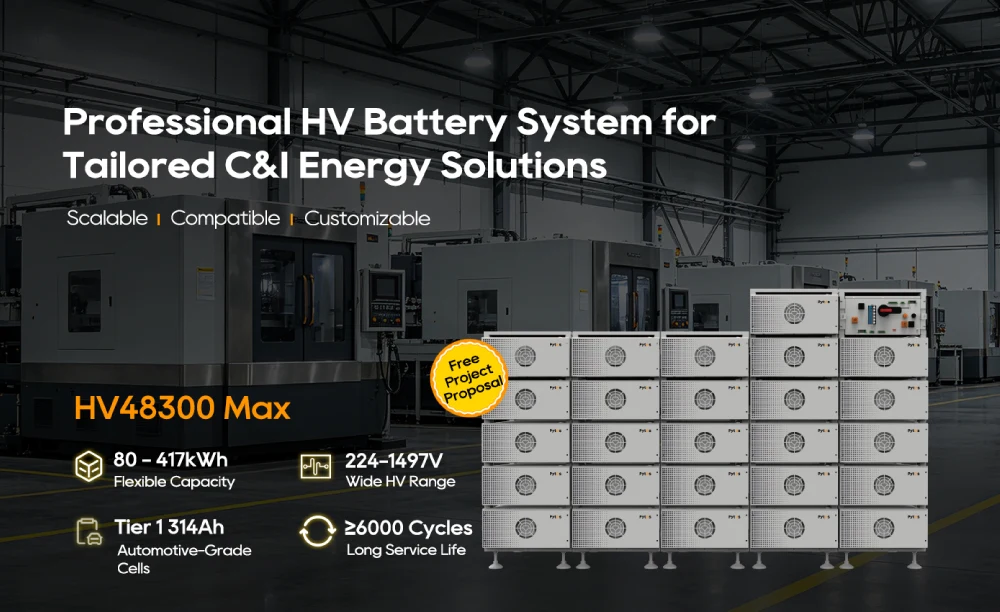
The Pytes HV48300 Max uses LFP battery modules with 314Ah cells and approximately 16.076 kWh of nominal energy per module. A single BCU can support up to 26 BMUs, providing approximately 417 kWh of battery capacity. Multiple BCUs can be connected in parallel for larger storage requirements.
This modular design allows system integrators to configure battery capacity according to the project's solar surplus and electricity demand.
Battery storage can supply part of a commercial building's electricity demand when solar generation declines. This is particularly useful for facilities that continue operating into the evening or experience late-afternoon demand peaks.
Depending on the electricity tariff, using stored solar power may reduce grid electricity purchases and help manage demand charges. Actual savings depend on battery efficiency, export compensation, electricity prices, and the site's operating schedule.
An energy management system can coordinate battery charging and discharging according to solar output, building demand, and battery operating limits.
The Pytes HV48300 Max provides a high-voltage LFP battery platform for integration with compatible inverters and energy management systems in commercial and industrial solar-plus-storage projects.
Repeated charging and discharging require appropriate battery monitoring and protection. The Pytes HV48300 Max uses an intelligent Battery Management System and incorporates an aerosol fire suppression module.
Its specified cycle life is at least 8,000 cycles under the manufacturer's stated test conditions. Actual service life depends on operating temperature, depth of discharge, charging and discharging rates, and other operating factors.
Proper system sizing, inverter compatibility, installation, and energy management remain essential to reliable operation.
When daytime solar generation exceeds immediate electricity demand, battery storage provides a way to shift that energy to periods when the building needs it.
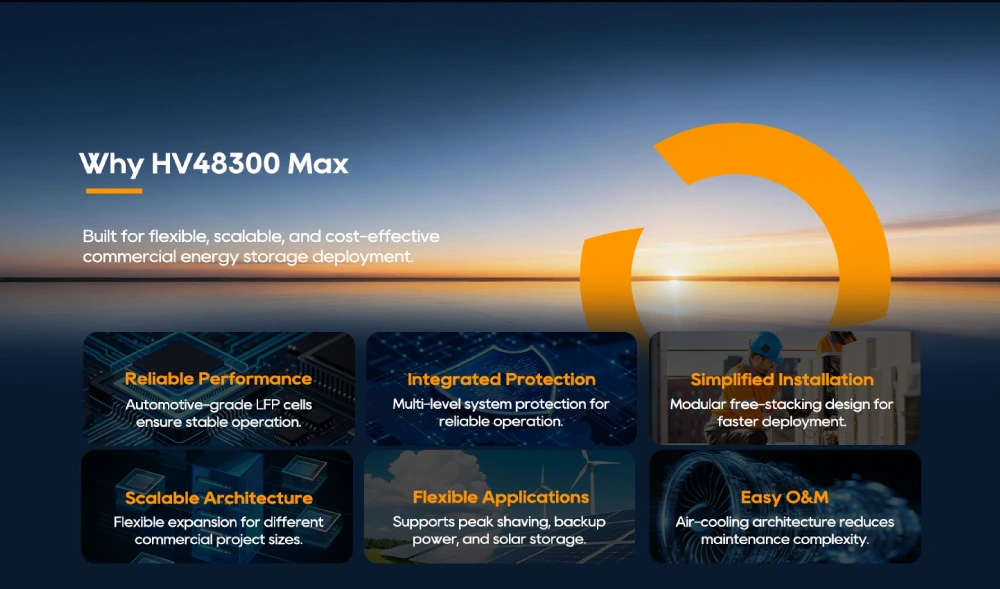
The Pytes HV48300 Max provides a modular high-voltage lithium iron phosphate (LFP) battery energy storage solution designed for commercial and industrial solar-plus-storage applications. Its modular design allows flexible configuration to meet the capacity requirements of different projects, offering system integration possibilities for commercial and industrial facilities with varying energy consumption levels and operational needs.
Whether the goal is to increase the self-consumption of rooftop solar energy or optimize daily energy management through energy storage, businesses can plan their system capacity and overall configuration based on their load profiles, solar generation patterns, and anticipated energy storage requirements.