
Newsroom
Energy storage systems store large amounts of electrical energy for use during power outages, peak demand, and periods of low solar generation. However, battery faults, abnormal temperatures, electrical short circuits, and improper installation can introduce fire risks. Effective fire safety design helps reduce these risks, protect surrounding equipment, and improve the reliability of the entire energy storage system.
Electrical faults can generate excessive heat and damage battery components. Overcurrent, short circuits, and abnormal charging conditions require appropriate protective measures.
A well-designed energy storage system should include suitable electrical protection, wiring, and compatible charging and discharging controls. These measures help manage electrical risks and reduce the likelihood of more serious safety incidents.
The Pytes V16 low-voltage LFP battery integrates a DC circuit breaker and a pre-charge circuit. These components support electrical protection and controlled system startup, helping simplify system integration and reduce the need for certain external safety components.
Battery chemistry is an important consideration in fire safety design. Lithium iron phosphate (LFP) batteries offer favorable thermal stability, but they are not completely free from fire risks.
For this reason, battery-level fire protection is an important part of system design. The Pytes V16 integrates an aerosol fire suppression module to provide an additional layer of fire protection within the battery. This feature complements electrical protection and appropriate installation practices rather than replacing them.
Outdoor and indoor installations present different safety challenges. Poor installation planning, unsuitable environmental conditions, and incorrect electrical connections can affect equipment operation and safety.
When planning an energy storage installation, consider the following:
Installation location: Follow the manufacturer's installation requirements and applicable local codes.
Environmental protection: Select equipment suited to the installation environment.
Electrical compatibility: Ensure that the battery, inverter, cables, and protective devices are properly matched.
Emergency access: Keep the installation accessible for inspection, maintenance, and emergency response.
The Pytes V16 features an IP66-rated enclosure and supports wall-mounted or ground-mounted installation. Its integrated heating pad helps support operation in cold environments within the specified operating limits. The battery's charging temperature range is 0°C to 55°C, while its discharging temperature range is -20°C to 55°C. These features help address environmental challenges, while proper site planning remains essential for fire safety.
For residential and light commercial energy storage projects, integrated protection can simplify system design by reducing the need for certain external components.
The Pytes V16 combines a 51.2V LFP battery architecture with 16.07kWh nominal energy capacity and a maximum discharge current of 200A. Its integrated DC circuit breaker, pre-charge circuit, and aerosol fire suppression module provide multiple layers of protection within a single battery unit.
For installers and system integrators, these features offer a practical starting point for designing energy storage systems that balance power requirements, installation efficiency, and safety considerations. External protection and system-level safety measures should still be selected according to the complete system design and applicable regulations.
Fire safety should be considered from the initial equipment selection stage through installation, commissioning, and ongoing maintenance. No single protective feature can eliminate every risk. A reliable design combines battery-level protection, appropriate electrical components, suitable installation conditions, and compliance with applicable fire and electrical codes.
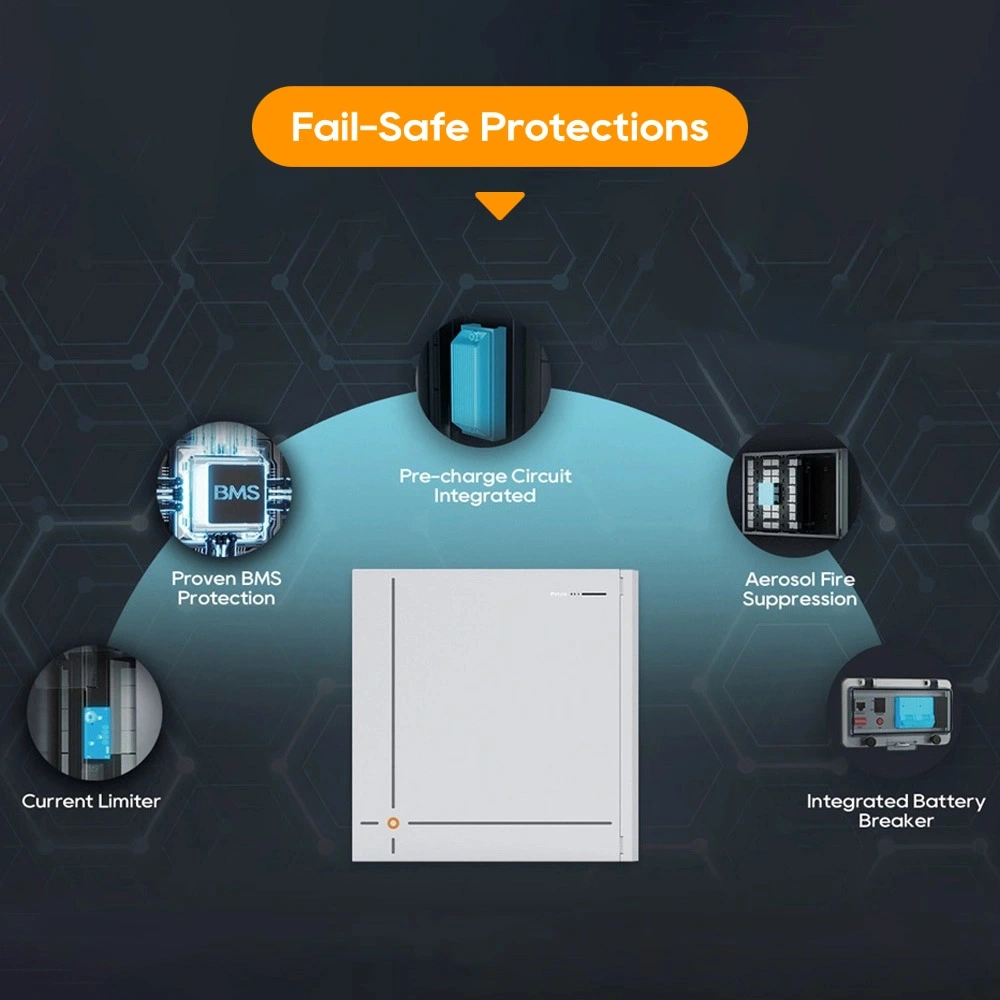
The Pytes V16 combines lithium iron phosphate (LFP) battery technology, integrated electrical protection mechanisms, and an aerosol fire suppression module to provide a multi-layered safety design for residential and light commercial energy storage applications.
By integrating battery technology with system-level protection measures, the V16 helps system designers and installers take a more comprehensive approach to equipment safety, installation requirements, and long-term operational needs when planning energy storage solutions.