
Newsroom
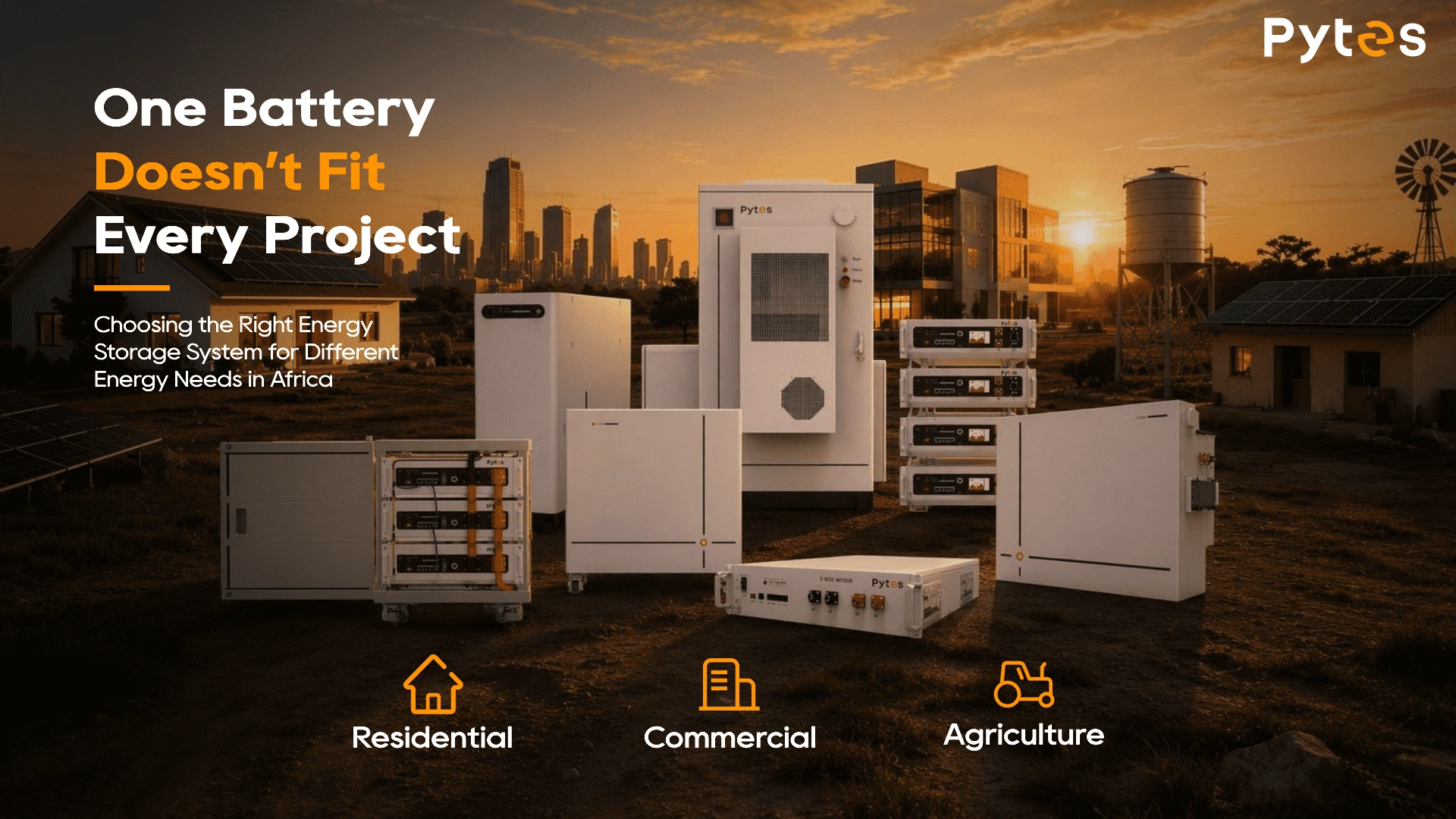
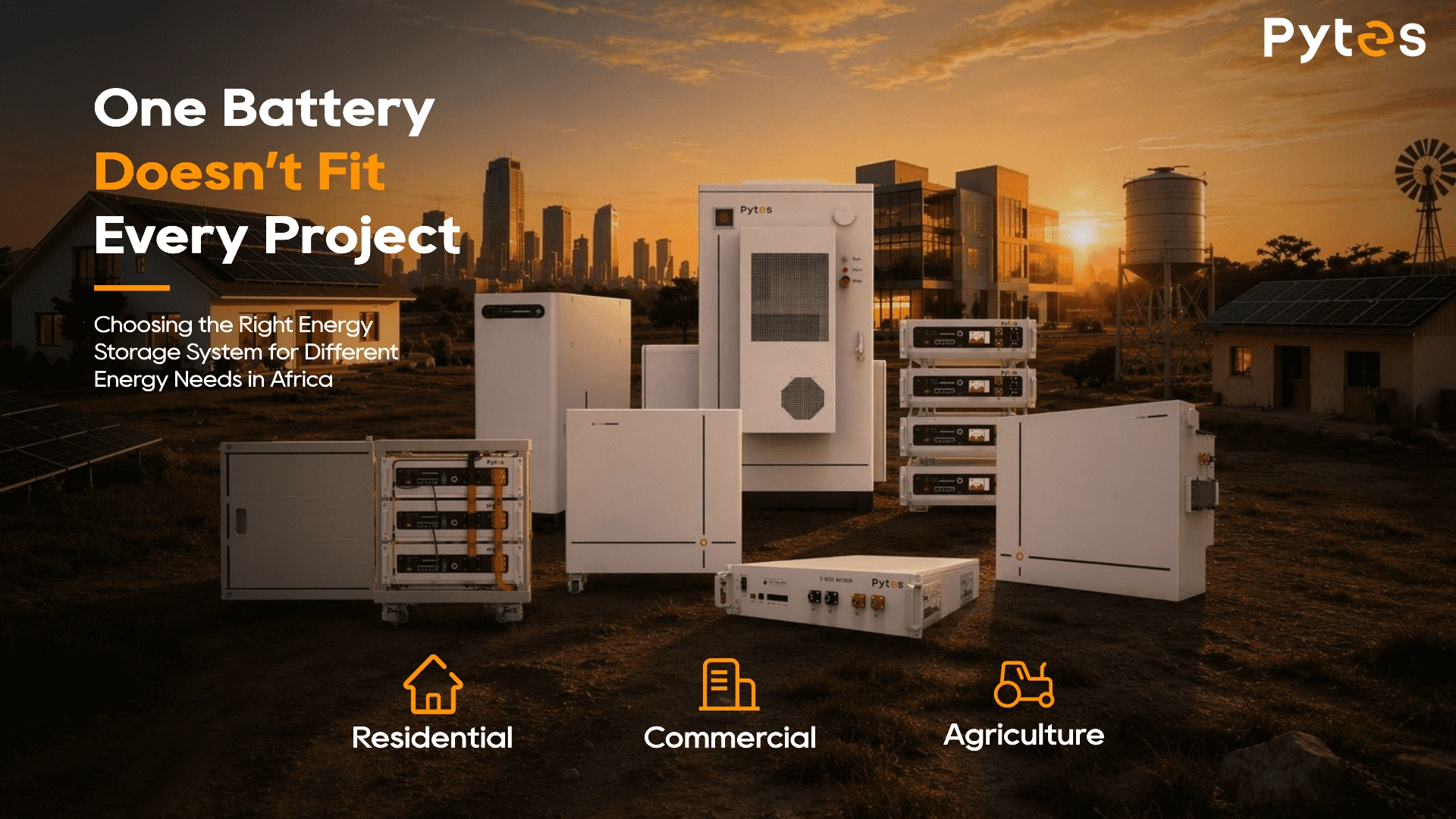
Africa's Energy Storage Market Is Entering a New Stage
Battery energy storage has become one of the fastest-growing technologies in the global energy transition. According to the International Energy Agency (IEA), battery deployment continues to accelerate as countries expand renewable energy generation and seek more reliable electricity systems. Energy storage is no longer viewed simply as backup equipment—it has become a key component of modern power systems.
This trend is equally visible across Africa.
Driven by rising electricity demand, declining battery costs and growing investment in solar energy, battery storage is increasingly being deployed in homes, commercial buildings, farms and industrial facilities. At the same time, buyers are becoming more knowledgeable. Instead of asking only about battery capacity or price, many now want to understand which solution best matches their specific energy needs.
The reality is that there is no universal battery solution for every project.
A system designed to provide emergency backup power is fundamentally different from one that cycles every day to reduce electricity bills. Likewise, an off-grid agricultural project has very different technical priorities from a business expecting to expand its electricity demand over the next five years.
Rather than comparing specifications alone, project owners should first identify what they expect the battery system to achieve. Once the project objective is clear, choosing the right energy storage solution becomes much easier.
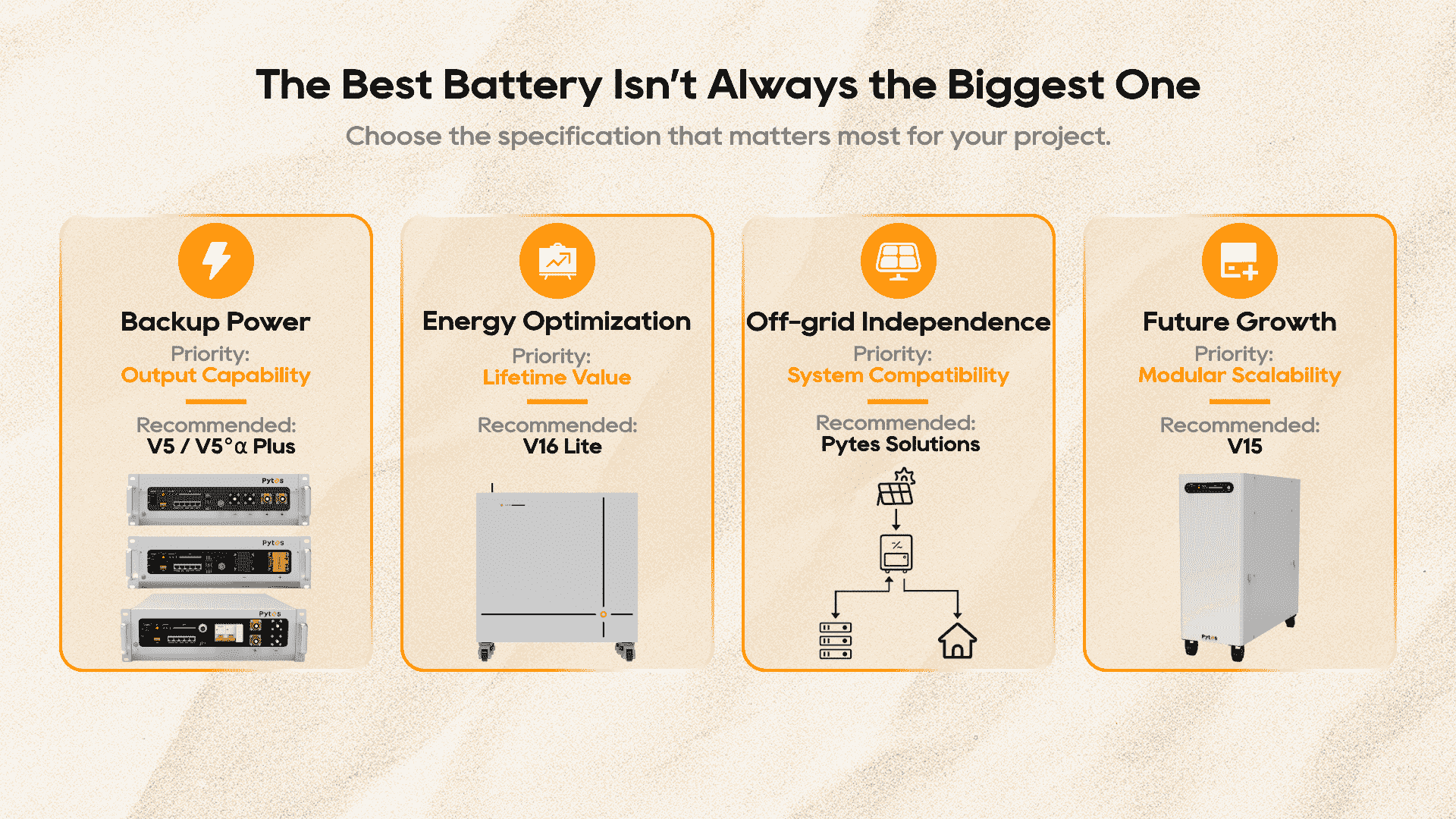
1. Backup Power: Prioritize Output Capability Over Capacity Alone
For residential users and small businesses affected by unstable grid supply, battery storage is primarily expected to keep essential equipment operating during power outages.
In this situation, battery capacity is important—but it is not the only specification that matters.
A battery with high energy capacity but insufficient output power may struggle to start air conditioners, water pumps or other appliances with high starting currents. Therefore, backup applications should evaluate both energy capacity and power delivery capability, ensuring that the battery can provide sufficient power exactly when it is needed.
For this type of application, Pytes' V5 and V5°α Plus are designed with a 0.75C continuous discharge rate, allowing the system to deliver higher output power while maintaining stable performance. Combined with modular expansion capability, users can configure the system according to their actual backup duration instead of simply purchasing the largest battery available.
2. Daily Energy Optimization: Focus on Lifetime Operating Cost
Not every battery spends most of its life waiting for a power outage.
Hotels, office buildings, factories and commercial facilities often charge and discharge their batteries every day to increase solar self-consumption, reduce electricity costs and optimize energy usage.
For these projects, the key consideration shifts from output capability to long-term operating value.
A battery performing daily charge and discharge cycles should offer a long service life, high cycle stability and low maintenance requirements. Features such as remote monitoring and online diagnostics also become increasingly valuable, helping installers identify potential issues quickly while reducing maintenance costs throughout the system's lifetime.
Designed for high-frequency cycling applications, the Pytes V16 Lite combines 16.07 kWh of usable capacity with up to 8,000 charge-discharge cycles, making it well suited for projects where battery utilization is part of everyday operation rather than occasional backup.
3. Off-grid Applications: System Compatibility Is Often More Important Than Battery Specifications
Across many rural communities, farms and remote commercial sites in Africa, battery storage is no longer a backup device—it is the foundation of the entire power system.
In these projects, selecting the right battery involves much more than comparing technical specifications.
Reliable communication between the battery and inverter, stable system integration and simple maintenance are often more critical than marginal differences in battery capacity. Since technical support may be limited in remote locations, reducing commissioning complexity and ensuring long-term system reliability become major considerations for installers.
Instead of focusing on a single battery model, project developers should evaluate the compatibility of the complete energy storage solution.
Pytes batteries have been validated with a wide range of leading inverter brands, including Victron, Growatt, Deye and Solis, helping installers simplify system integration while providing greater flexibility for off-grid and hybrid solar projects.
4. Future Expansion: Design for Tomorrow, Not Just Today
Energy demand rarely stays the same throughout a project's lifetime.
A household may add air conditioning, an electric vehicle charger or additional household appliances. A growing business may increase production capacity or extend operating hours. Designing a system solely around today's electricity consumption can therefore lead to unnecessary replacement costs in the future.
For projects with evolving energy needs, modular scalability should be one of the highest priorities during system selection.
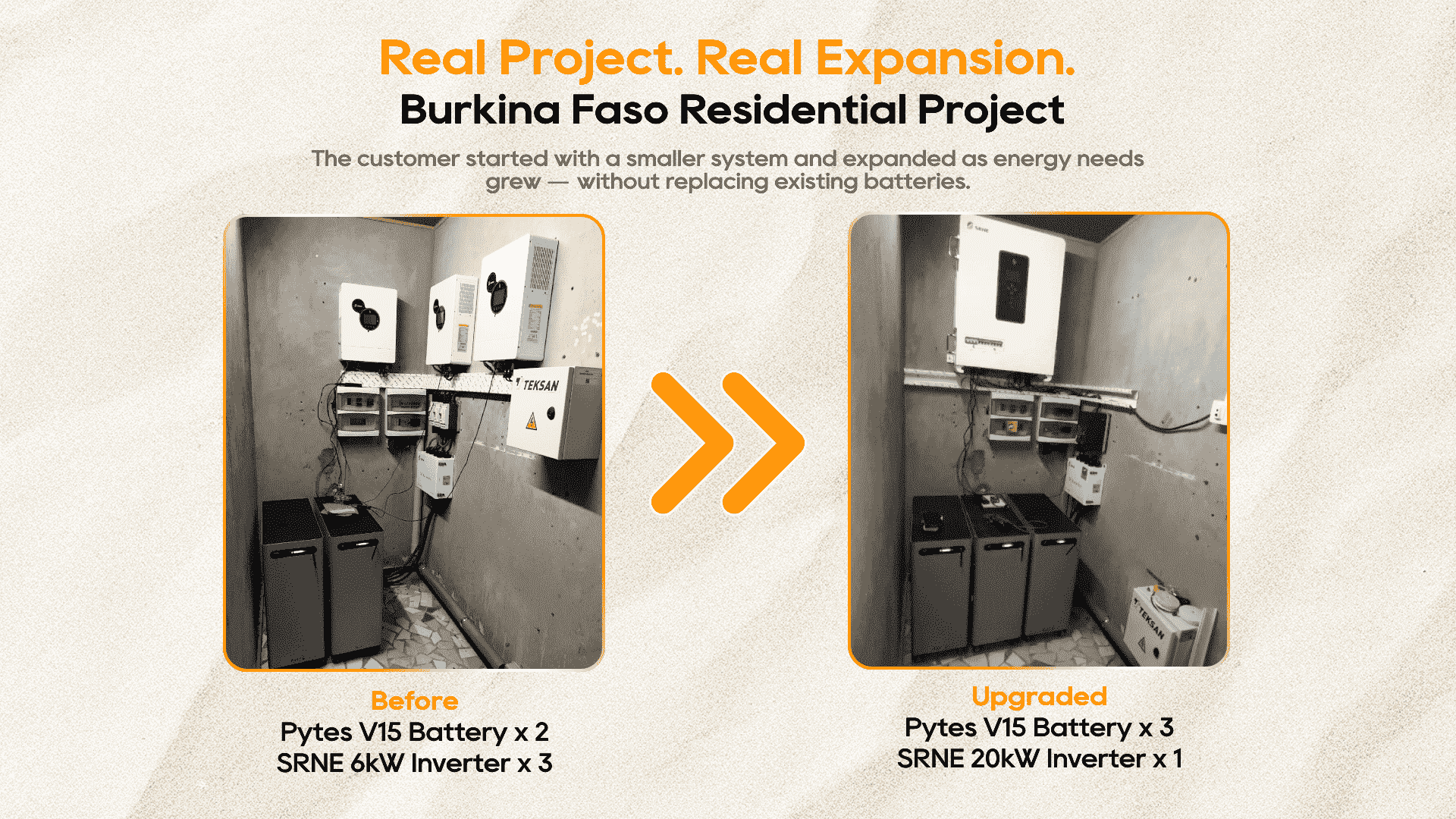
Instead of replacing an entire battery bank, users should be able to expand storage capacity gradually while retaining their original investment.
A residential project in Burkina Faso demonstrates this approach in practice. The customer initially installed a Pytes V15 battery system and later expanded the storage capacity as electricity demand increased. Because the system was designed with modular expansion in mind, the upgrade required no replacement of the existing batteries, allowing the customer to scale the system efficiently while protecting the original investment.
Conclusion
As Africa's energy storage market continues to mature, choosing the right battery is no longer about selecting the highest capacity or the lowest price.
The best solution depends on what the project is expected to accomplish.
Projects focused on backup power should prioritize output capability. Systems used every day should emphasize long-term operating value. Off-grid installations require reliable system compatibility, while projects expecting future growth benefit most from modular expansion.
Different projects require different priorities.
The most successful energy storage systems are not necessarily those with the biggest batteries—they are the ones designed around the right energy challenge.