
Newsroom
High temperatures are a major consideration when deploying commercial and industrial battery energy storage systems. In regions with hot summers or consistently high ambient temperatures, battery systems must manage the heat generated during charging and discharging while keeping battery temperatures within a safe range.Without effective thermal management, excessive heat can affect battery performance, accelerate component aging, and increase system maintenance requirements.
For energy storage projects in hot climates, selecting a battery system with dedicated cooling capabilities, temperature monitoring, and comprehensive protection is essential.
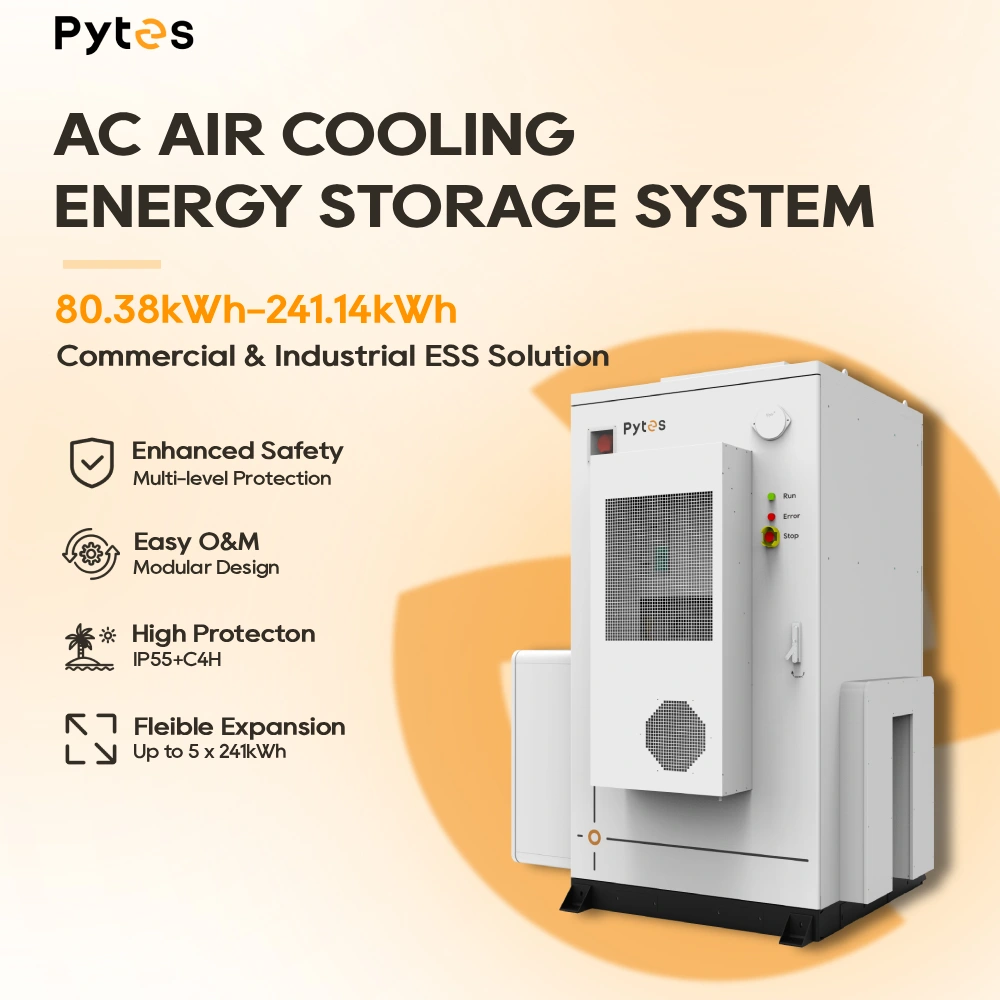
Battery systems generate heat during normal charging and discharging. When the surrounding temperature is already high, this internal heat can become more difficult to dissipate. Continuous operation under elevated temperatures may accelerate battery degradation and affect long-term system reliability.
The impact is particularly important in commercial and industrial applications, where energy storage systems may operate under demanding load conditions and require consistent performance.
An effective thermal management strategy therefore has to deal with both ambient heat and the heat generated by the battery itself. Cooling capacity, airflow design, battery management, and installation conditions all play a part.
Passive ventilation alone may not provide sufficient cooling for large-capacity battery systems operating in hot environments. Active cooling provides a more controlled approach by removing excess heat from the battery cabinet.
The Pytes HV48300 Max SE addresses this requirement with an integrated HVAC system. Its 5,000 W rated cooling capacity (L35), combined with module-level fans and forced-air cooling, helps manage internal temperature during operation.
This arrangement is particularly relevant for high-capacity energy storage installations, where multiple battery modules operate within the same cabinet. By supporting heat removal and airflow, the cooling system helps maintain suitable operating conditions for the battery modules.
The system also features a 2,500 W heating capacity, supporting temperature management in colder operating conditions.
Cooling is important, but the overall reliability of an energy storage system also depends on battery chemistry and management.
The HV48300 Max SE uses Lithium Iron Phosphate (LFP) battery cells. LFP technology is widely used in commercial energy storage because of its thermal stability and suitability for stationary energy storage applications.
Its Battery Management System (BMS) provides battery monitoring and protection, helping manage operating conditions during charging and discharging.
The HV48300 Max SE supports charging temperatures from 0°C to 55°C and discharging temperatures from -20°C to 55°C. These operating ranges make it suitable for projects in hot climates, subject to proper installation, cooling operation, and compliance with the manufacturer's operating requirements.
High-temperature operation also makes comprehensive safety management an important consideration. A reliable battery storage solution needs more than temperature control; it should incorporate protection measures to address abnormal conditions.
The HV48300 Max SE integrates multi-level active fire protection, including hazardous gas detection and ventilation, aerosol fire suppression, pressure relief, and a fire hose connection.
These measures provide different layers of response to potential safety incidents. Combined with battery monitoring and thermal management, they contribute to a more comprehensive approach to energy storage system protection.
When choosing a battery system for hot climates,cooling performance is another important factor. For large-capacity systems, an integrated HVAC solution can provide more controlled thermal management than relying only on natural ventilation.
Installation conditions also matter. Cabinet placement, airflow clearance, exposure to direct sunlight, and maintenance access can all influence cooling effectiveness. Even a battery system with an advanced cooling design needs to be installed and operated according to the manufacturer's guidelines.
For commercial and industrial projects requiring scalable storage capacity, the Pytes HV48300 Max SE combines LFP battery technology, integrated HVAC cooling, module-level airflow management, and multi-layer safety protection. Its modular configuration also allows multiple cabinets to be connected in parallel to expand storage capacity according to project requirements.